Peter Ramacher • March 21, 2026
TL;DR
- Proven coaches get stuck when growth depends on daily founder effort instead of systems.
- SEO becomes non-founder-dependent growth once the right website infrastructure is built.
- The biggest SEO win is not “more traffic” — it’s more trust at the moment of intent.
- Strong SEO supports scaling by reducing reliance on social media, referrals, and constant posting.
- The best strategy targets high-intent, long-tail keywords your ideal clients search before they book.
- Topic clusters, pillar pages, and internal linking help content compound over time.
- SEO traffic only works if it converts, which is why lead magnets, CTAs, and nurture funnels matter.
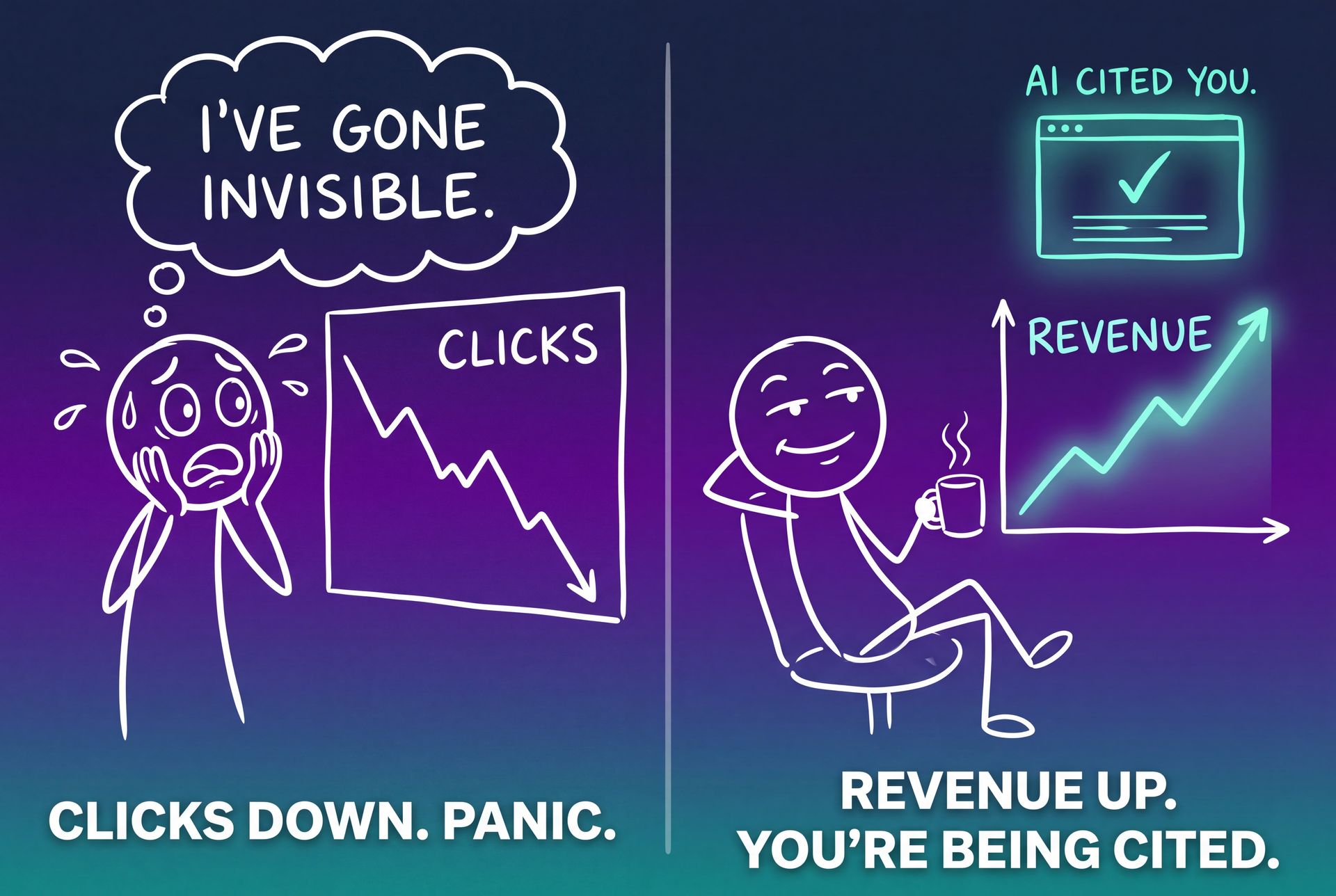
- For Broda Coaching, SEO became a second engine alongside LinkedIn and influenced $208,429 in annualized revenue.
- Main takeaway: Scale comes from infrastructure that builds authority, trust, and qualified discovery — not from posting more.
Introduction
If you’re already running a proven coaching business—consistent sales, real client outcomes, a clear method—your problem usually isn’t whether you can get results.
It’s that your business grows only as fast as you can:
- Post on social media.
- Run calls.
- Do delivery.
- Handle decision-making across the entire process.
So the calendar fills, the team needs answers, and you become the biggest constraint.
We have seen this pattern repeatedly across the coaching industry, especially with founders whose main acquisition engine has been founder-led content. Our main takeaway is simple:
Scale isn’t about posting more or spending more on ads. It’s about building infrastructure that establishes authority and trust which produces qualified discovery without founder labor.
That’s what this post is about: how to scale your coaching business when you’re already proven, without turning your life into a content factory.
SEO for Coaches: How to Scale a Coaching Business When You're Already Proven Without Becoming the Bottleneck
Most coaches don’t get stuck because they’re “bad at marketing.” They get stuck because their growth system is still one to one.
Even if you’ve built strong demand on LinkedIn or via referrals, you’re still depending on:
- Daily founder effort.
- Ongoing visibility cycles.
- Attention platforms that fluctuate.
Search engine optimization changes the structure: it turns your expertise into a compounding asset that future clients can find when they’re actively looking.
Here's how to think about it:
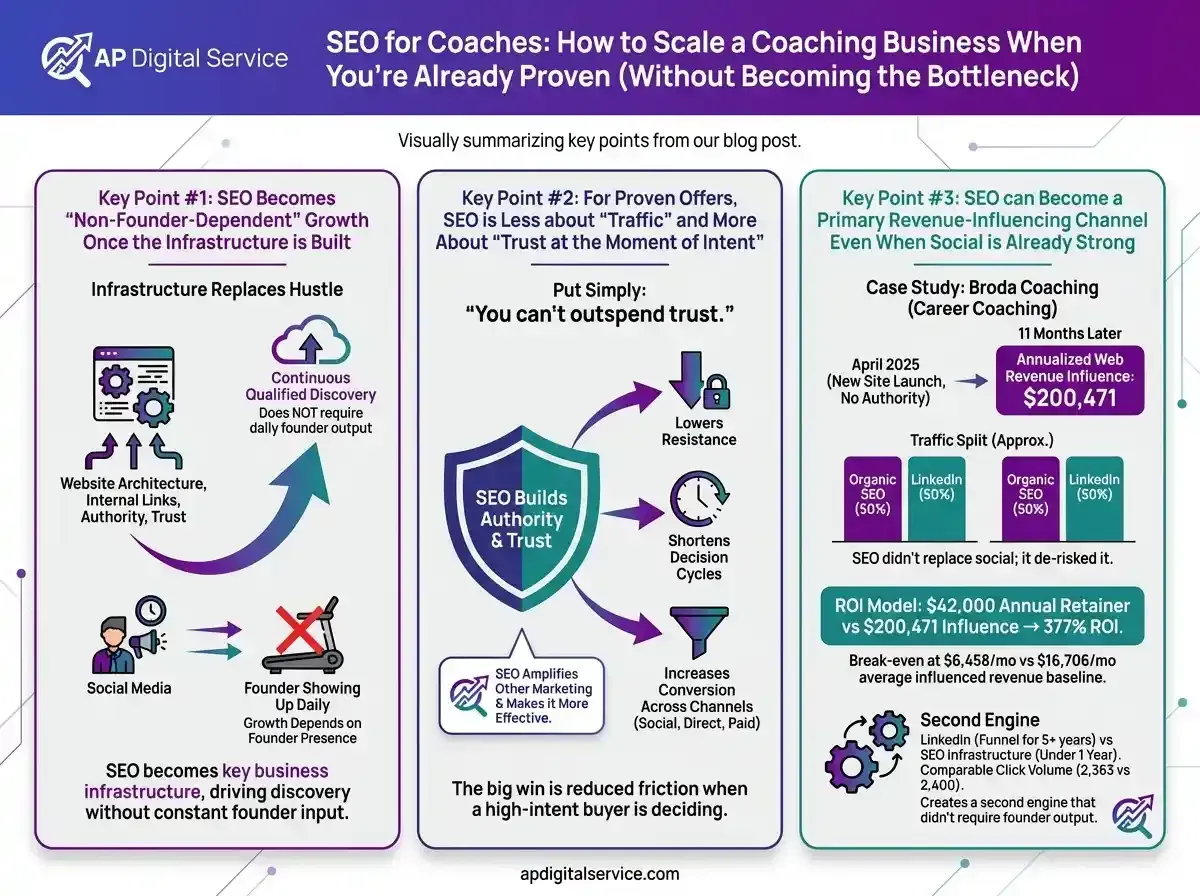
Key Point #1: SEO Becomes “Non-Founder-Dependent” Growth Once the Infrastructure is Built
When the website architecture, internal links, authority signals, and trust are in place, SEO becomes key business infrastructure. It continues to drive qualified discovery without requiring more founder output. That’s fundamentally different from social, where growth often depends on the founder showing up daily.
Quick Assessment for a Proven Coaching Business: Are You Ready to Scale?
Before you “do more,” confirm you’re scaling the right thing.
A simple readiness check for your online coaching business:
- Offer proof: You have consistent sales, paid clients, and a repeatable transformation.
- Client outcomes: You can clearly articulate the client journey—starting point → process → result.
- Acquisition clarity: You know where leads come from today (referrals, social, paid ads, partnerships) and what converts.
If these are true, SEO isn’t about “experimenting with content.” It’s about putting your proven offer in front of potential clients who are already searching and have intent.
Shift Your Business Model to Avoid Becoming the Bottleneck
Even the best marketing won’t fix a business model that requires you to be present for every dollar.
Most coaches struggle to scale their businesses because they rely too heavily on personal involvement in coaching sessions. And many coaching businesses hit a ceiling not because the offer isn’t strong, but because they don’t have clear systems for generating leads and managing client relationships as demand increases.
To avoid staying stuck, separate:
- What requires founder involvement (high-leverage leadership, offer refinement, key sales conversations).
- What should be systematized (content creation, lead generation, onboarding, nurture, delivery support).
To effectively scale a coaching business, it’s essential to build systems and processes that can handle increased demand without compromising service quality. True scale in coaching means creating systems that allow for ongoing client engagement and reinforcement of insights, even when the coach is not present.
This is where SEO fits beautifully: it supports increasing efficiency by removing founder dependency from top-of-funnel visibility—so new leads don’t require your constant presence to arrive.
It also supports the middle of the funnel by building authority and trust before the call. Specifically, it reduces friction for high-intent potential clients who are already comparing options and looking for proof, not persuasion. When your site answers the right questions and demonstrates credibility, prospects move faster from interest to booked consult.
And it plays well with other scaling moves like:
- Group programs (one-to-many delivery).
- Productized education.
- Associate coach delivery models.
Scaling Paths for an Online Coaching Business (And Where SEO Fits)
There are three key scaling paths: product, delivery, and operations. For most proven coaches, SEO supports all three, but especially the transition away from founder-led demand.
At a deeper level, effective scaling of a coaching business requires a shift from personal connections alone to systems (and selective automation) that support consistent client engagement. To scale a coaching business, it’s important to have clear processes and automations in place, so growth doesn’t depend on the coach’s daily output.
Product-Led Scaling (Supporting Fewer Clients at Higher Leverage)
SEO helps the right people find:
- Your signature framework.
- Your point of view.
- Your “this is for you / not for you” positioning.
This makes it easier to sell courses, workshops, and paid assets without endless manual promotion—because your content keeps working even when you’re not “online.”
Delivery-Led Scaling (Including Executive Coaches)
If you’re building group programs or training other coaches, SEO helps pre-sell trust, so calls aren’t education sessions. They’re decision calls. It supports a smoother client journey by answering questions upfront and reinforcing credibility before someone ever talks to you.
This matters a lot for:
- Executive coaches.
- Career coaching.
- Leadership-focused offers that require credibility upfront.
Operations-Led Scaling (Stop Being the Bottleneck)
SEO content becomes a system, not a scramble:
- Clear processes for topic selection.
- Content written to match search intent.
- Templates and SOPs that reduce repetitive tasks.
This is where automation really earns its keep: with workflows for outlining, publishing, internal linking, and lead capture, the system keeps running without constant founder involvement. You can use AI tools for speed, but the strategy still needs human expertise.
Search Engine Optimization that Brings Future Clients (Without “More Effort”)
Key Point #2: For Proven Offers, SEO is Less about “Traffic” and More About “Trust at the Moment of Intent”
The big win isn’t impressions—it’s reduced friction when a high-intent buyer is deciding.
Put simply: “You can’t outspend trust.”
SEO builds authority that:
- Lowers resistance.
- Shortens decision cycles.
- Increases conversion across channels (social, direct, and even paid).
This is why SEO doesn’t compete with other marketing like paid ads and social media. It amplifies it and makes it more effective.
Keyword Strategy for Coaches: Long Tail Topics that Match Buyer Intent
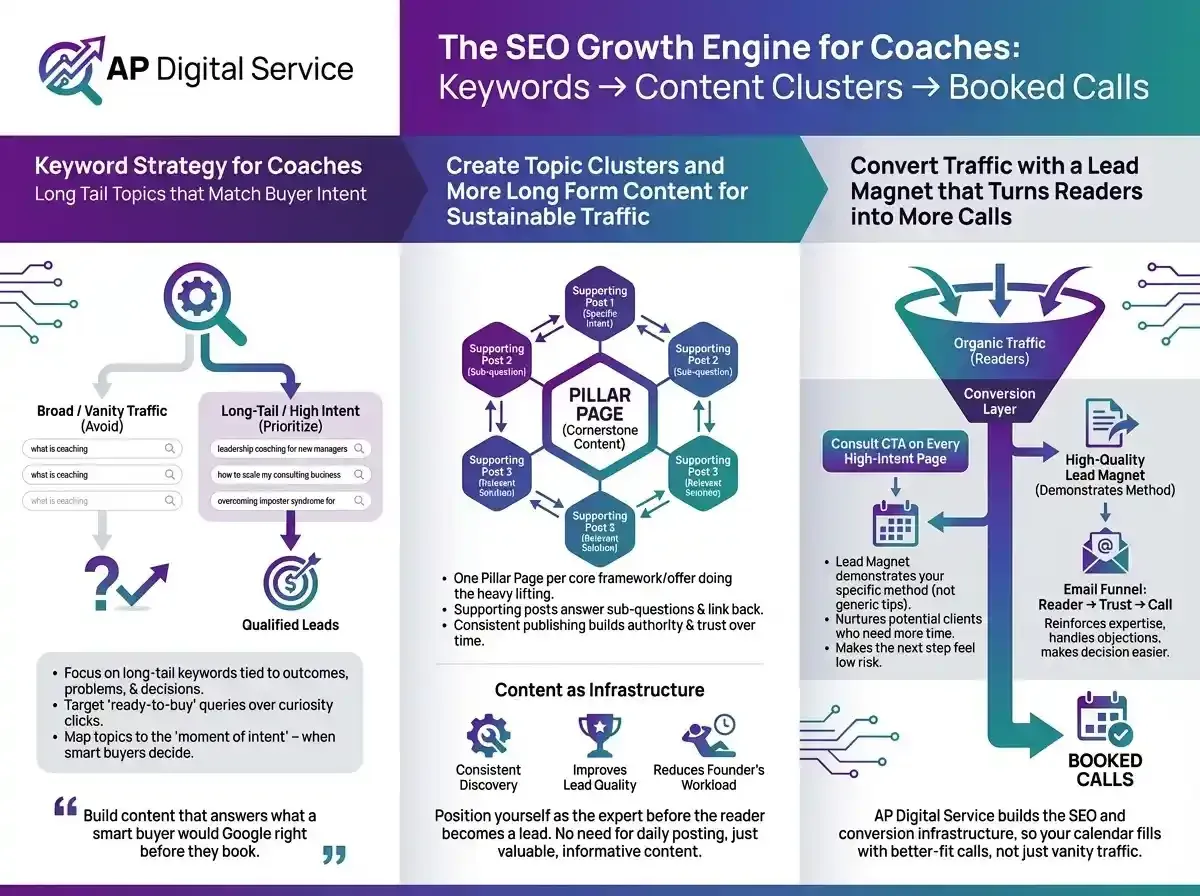
If you’re already proven, you don’t need “viral topics.” You need a keyword strategy that matches what qualified buyers type into search engines when they’re actively looking for help—so your content shows up for the people most likely to become paid clients.
This is something we build for coaches inside your SEO and website infrastructure. We start with keyword research to identify the exact phrases your ideal client uses when they’re close to a decision, then we prioritize topics that pull in ready-to-buy traffic (not broad curiosity clicks).
That means we focus on:
- Long-tail keywords tied to outcomes, problems, and decisions (specific searches that signal intent and attract more qualified leads).
- Keywords aligned to the “moment of intent." The point where someone is comparing options, seeking proof, and deciding who to trust.
- “I’m ready to solve this” queries (high-intent) instead of generic “what is coaching” searches that rarely convert.
A useful rule we apply when mapping topics: build content that answers what a smart buyer would Google right before they book.
That keeps your SEO strategy on the same page as revenue, so your calendar fills with better-fit calls, not vanity traffic.
Create Topic Clusters and More Long Form Content for Sustainable Traffic
You don’t need hundreds of articles. You need a structure that compounds—and content-focused SEO can massively benefit coaches who want to expand their impact to new audiences without adding more hours to their calendar.
A simple topic cluster approach:
- 1 pillar page per core framework/offer (your long-form “cornerstone” that does the heavy lifting).
- Supporting posts that answer sub-questions and link back (the specific, intent-driven pieces that bring in the right searchers).
- Internal linking that helps both readers and search engines understand your authority.
This is where SEO becomes more than “publishing.” SEO is about creating helpful content that connects users with relevant solutions, which builds trust and authority over time, especially when a potential client is actively searching.
And yes, regular content creation is essential to improve your SEO and attract ideal clients. Not daily posting. Not endless “more posts.” Just consistent publishing of valuable, informative blog posts that prove you know the problem, the process, and the result. This way, you’re positioned as the expert before the reader ever becomes a lead.
This is content creation as infrastructure:
- It creates consistent discovery.
- It improves lead quality.
- It reduces the founder’s need to “start creating” every week just to stay visible.
This is exactly what we do for the coaching businesses we work with.
Convert Traffic with a Lead Magnet that Turns Readers into More Calls
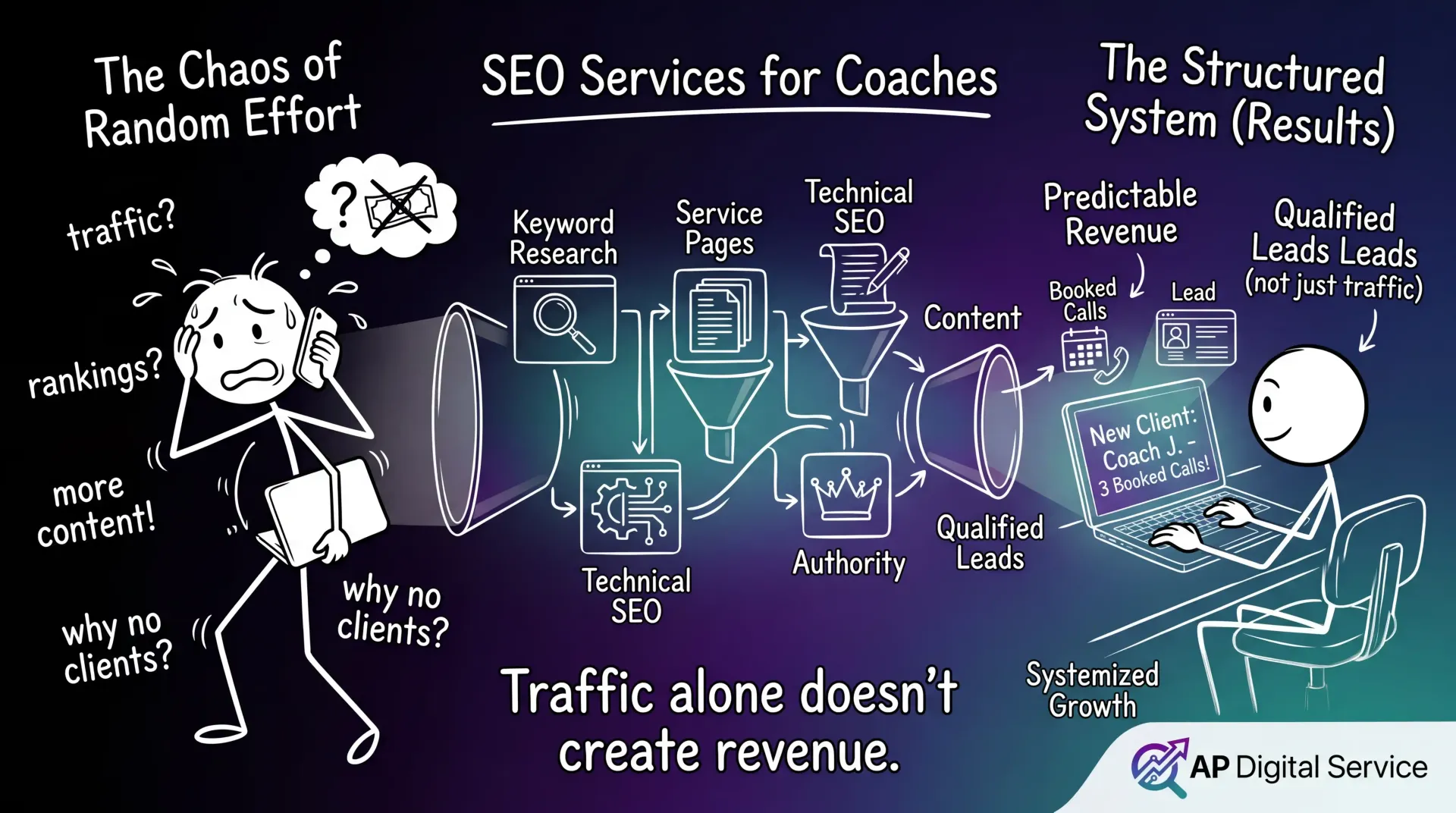
SEO without conversion is just a library.
At AP Digital Service, we don’t just help coaches get discovered, we build the conversion layer that turns the right search traffic into leads and booked calls. That means every high-intent page is designed to do something, not just inform. Coaches convert website traffic into leads when their content includes clear calls to action and a strong lead magnet inside the page experience (instead of hiding the next step in a menu).
Here’s what we implement and why it works:
- We create a lead magnet that demonstrates your method (not generic tips), so the right readers raise their hand. A high-quality lead magnet is essential for nurturing potential clients who discover your coaching services through search, because most won’t book on the first visit, but they will opt in when the value is obvious and specific.
- We place a consult CTA on every high-intent page, so “ready-now” visitors have a direct path to book without friction.
- We build an email funnel that moves people from reader → trust → call, reinforcing your expertise, handling common objections, and making the decision feel easier over time.
This is where many coaches drop the ball: they publish content, but they don’t build the system that turns content into new clients. We make sure the infrastructure is there so qualified leads can convert even when the founder isn’t actively selling.
A good lead magnet does three things:
- Creates a quick win.
- Shows your expertise and process.
- Makes the next step feel low risk.
The Proof: More Revenue Even When Social Media is Already Strong
Key Point #3: SEO can Become a Primary Revenue-Influencing Channel Even When Social is Already Strong
Here's an example from the work we did for a Career Coaching business, Broda Coaching:
- New website launched April 2025; the prior site had no topical authority and wasn’t ranking.
- Over 10 months, annualized web revenue influence reached $208,429.
- Traffic was split roughly half organic / half LinkedIn—meaning SEO didn’t replace social; it de-risked it.
- ROI model: $42,000 annual retainer vs $208,429 annualized influence → 396% ROI.
- Break-even at $6,458/mo vs an average $17,369/mo influenced revenue baseline.
And here’s the moment that captures “without becoming the bottleneck” in real terms:
LinkedIn had been the only funnel for 5+ years; then SEO infrastructure drove comparable click volume (2,363 clicks vs 2,400) in under a year and created a second engine that didn’t require founder output.
That’s what scaling looks like when infrastructure replaces hustle.
AP Digital Service SEO Systems: Reduce Founder Workload While Bringing in Ready-to-Buy Leads
The operational unlock is simple: don't look at SEO as a founder task, treat it like website infrastructure your team can run without you.
At AP Digital Service, we implement a system that keeps SEO moving while protecting the founder’s time and lead quality. That starts with keyword research to identify what potential clients are actually searching for, then prioritizing high-intent, niche-specific and long-tail keywords (longer, more specific phrases) that attract qualified leads who are ready to buy. Not broad traffic that drains your calendar with bad-fit calls.
To build systems that scale without content fatigue, we put structure around execution:
- Cornerstone content first: We create long-form “pillar” blog posts that can drive traffic over time with only occasional updates, so the site compounds without constant posting.
- Evergreen > frequent posting: We shift from “always create more” to building evergreen assets that keep performing.
- Repurpose what already exists: Testimonials, client wins, and older posts become upgraded SEO assets, so you get stronger performance without creating everything from scratch.
- Outcome-based proof hubs: We build client case study hubs optimized around specific results and outcome keywords, which strengthens trust and improves search performance.
- Authority signals that matter: We focus on earning links from reputable websites, because quality links move the needle more than lots of low-quality ones.
Then we run it with clear processes—topic selection, briefs, outlining, publishing, and internal linking—so your voice stays consistent while specialists handle the repetitive work. You stay in strategy and positioning (including sharpening your unique sales proposition), while our system consistently brings in high-fit searchers and reduces the chances you become the bottleneck again.
Common Traps Most Coaches Fall into When Scaling
A few patterns we repeatedly see across many coaches:
- Swapping coaching for automation alone (tools don’t replace strategy).
- Automating the wrong thing just scales confusion.
- If the messaging, offer, or client journey isn’t clear, automation simply moves more people into a leaky funnel.
- Launching too many offers before the funnel is stable.
- Every new offer adds more pages, more positioning decisions, more follow-up, more sales friction.
- The result is scattered marketing and inconsistent sales, because you’re asking your audience to make too many different decisions.
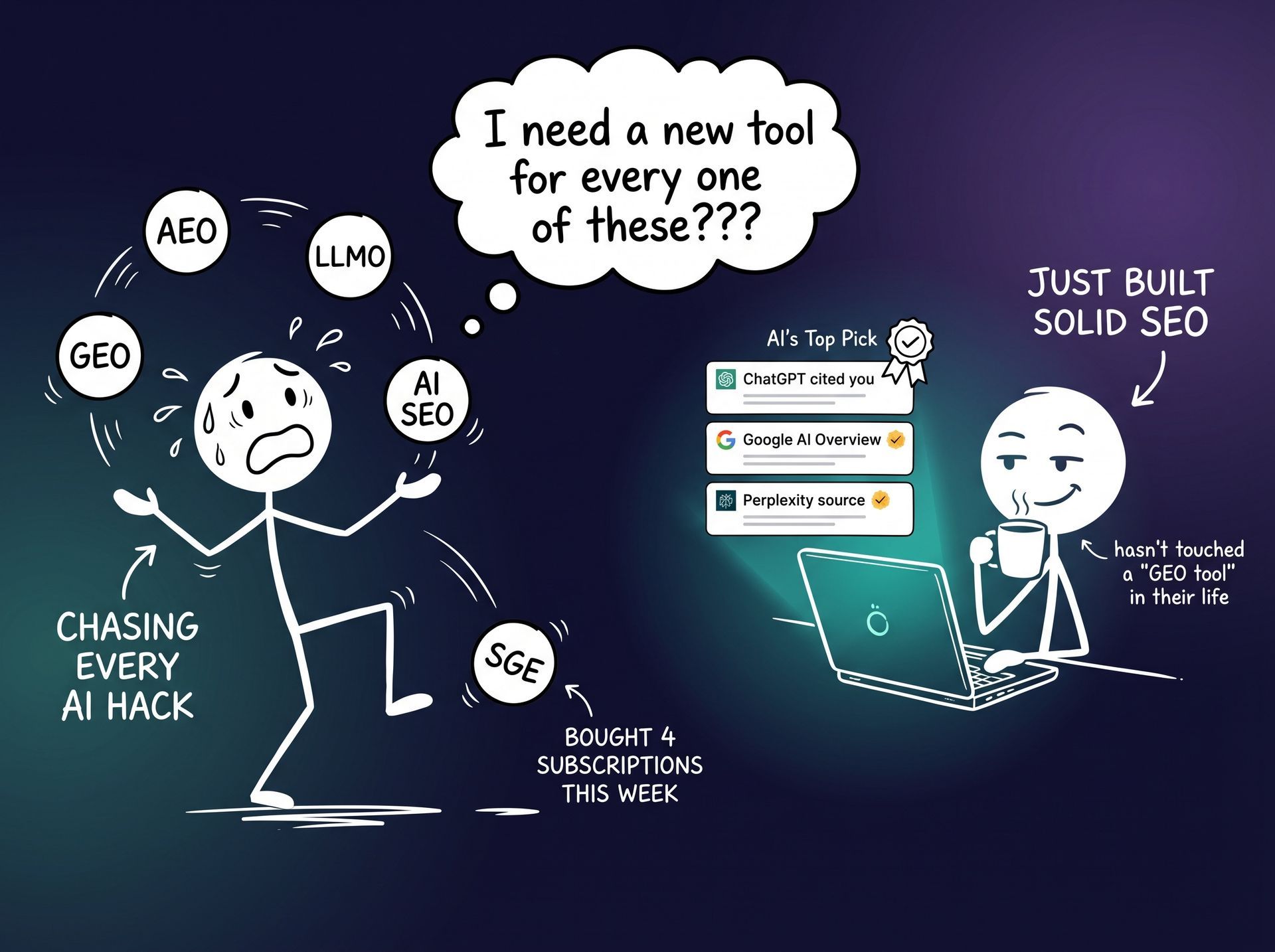
- Chasing “more posts” instead of building a system that converts.
- Creating content without a conversion path turns your site into a library, not a pipeline.
- Without internal linking, clear CTAs, and a lead magnet + nurture sequence, content creates activity, but not reliable leads and more coaching clients.
- Trying to scale acquisition without fixing capacity and delivery.
- More leads won’t help if your calendar is already maxed, onboarding is manual, or delivery depends on you for every client touchpoint.
- Scaling only works when operations and delivery can handle the demand without sacrificing service quality.
If you’re already proven, your goal is not more noise. It’s a dependable engine that produces qualified discovery, reduces friction for high-intent buyers, and keeps your pipeline stable, even when you’re not posting every day.
Main Takeaway: Scale Without Posting More, Spending More Time, or Becoming the Bottleneck
If your coaching business is already proven, SEO isn’t a beginner tactic. It’s growth infrastructure.
Scale isn’t about posting more or spending more on ads; it’s about building infrastructure that establishes authority and trust and produces qualified discovery without founder labor.
When you do that, you get:
- More leads that already understand your value.
- Fewer “convince me” calls.
- More revenue without the founder being the constant fuel source.
Want SEO to Become Your Second Engine (Without Adding Founder Workload)?
If you’re an established coach (or business coach) doing $500K–$1M/year and you’re ready to build non-founder-dependent growth, the next step is to Request a Visibility Review.
Here’s what happens when you request it:
- We’ll send you a video walkthrough showing how you currently show up online—where you’re able to be found, what keywords you’re ranking for, and what your visibility looks like today.
- Then we’ll give you an overview of actionable steps that move the needle—the specific fixes and opportunities across SEO and website infrastructure that help bring in higher-quality, high-intent leads without adding more founder workload.