Peter Ramacher • April 21, 2026
TL;DR
- Good SEO services for coaches are not about traffic alone. They are about building infrastructure that attracts qualified leads.
- The biggest drivers of results are keyword research, conversion-focused service pages, technical SEO, high-quality content, and authority-building.
- Trust at the moment of intent matters more than vanity rankings or broad traffic.
- Blog content works best when it answers real buyer questions and supports the rest of the site through internal linking.
- SEO becomes more powerful when it is integrated with Google Ads, email, and conversion improvements.
- The goal is not just better visibility. The goal is a system that compounds into booked calls, clients, and revenue over time.
Introduction
If you’re an established coach with a proven offer, you do not need to be more active on more social media platforms. You need a system that helps the right people find you, trust you, and take the next step.
That is the real job of SEO services for coaches.
We have seen this firsthand through years of building and optimizing websites to improve visibility, authority, and conversions through search. The best SEO services do not simply chase organic traffic or vanity search engine rankings. They build authority-based infrastructure on your own website that helps attract qualified leads, support business growth, and reduce how much growth depends on founder effort.
If there is one core idea to take from this post, it is this:
The best SEO services for coaches don’t just increase visibility. They build authority-based infrastructure that captures high-intent demand, reduces founder dependence, and compounds into qualified leads and revenue over time.
Why Search Engines Matter for a Coaching Business
For many coaches, growth begins with referrals, social media, or founder-led content. That can work for a while. But as the calendar fills, delivery expands, and the business grows, marketing becomes one more thing the founder has to keep feeding.
That is where search engine optimization becomes different.
Unlike platforms that require constant posting, organic search can become a more stable lead channel. When your coaching website is built around the right SEO strategy, it can appear in search engine results when potential clients are already looking for help. That changes the conversation from interruption-based marketing to intent-based discovery.
In our experience, this is why SEO performs best when it is treated as infrastructure, not a campaign. Once the site structure, internal links, service pages, trust signals, and conversion paths are in place, the website can keep producing qualified discovery without requiring constant founder effort.
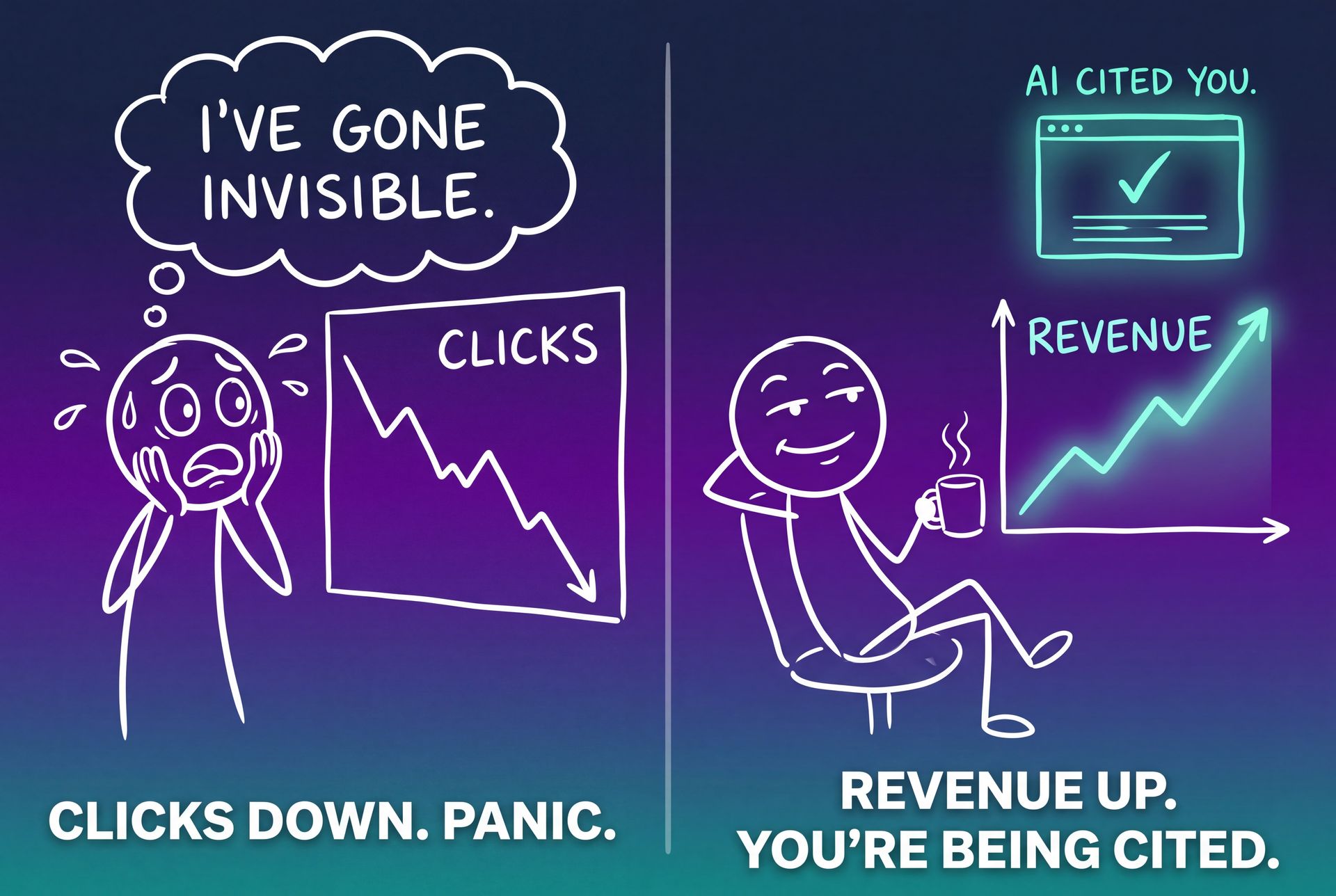
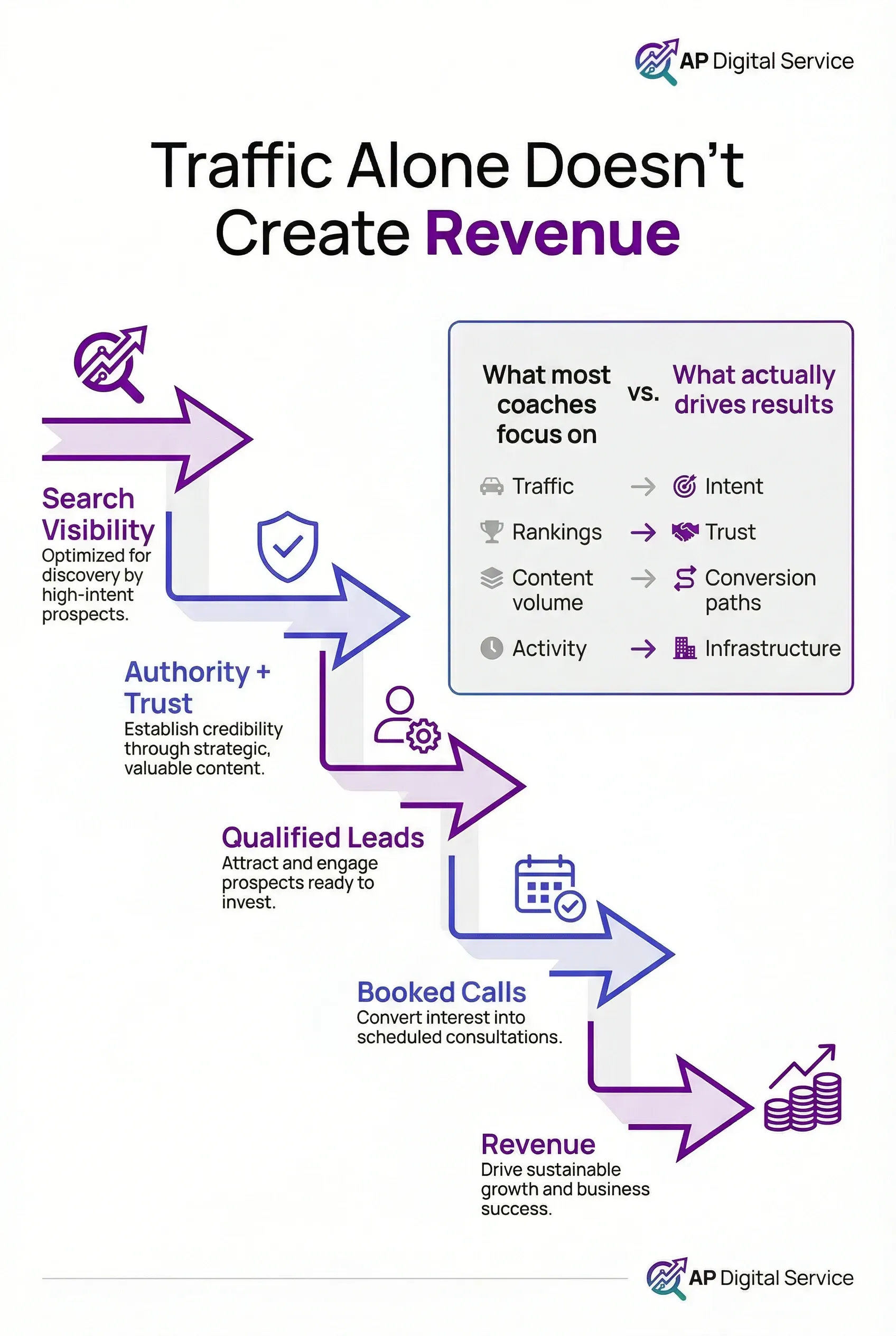
That is also why SEO for coaches should not be judged by traffic alone. Traffic does not create revenue on its own. Authority, trust, and conversion paths do.
SEO Services That Actually Drive Search Results and Qualified Leads
Not all SEO efforts are equal.
A lot of coaches assume SEO means writing blog posts or adding a few keywords to a page. But strong SEO services for coaches are far more strategic than that.
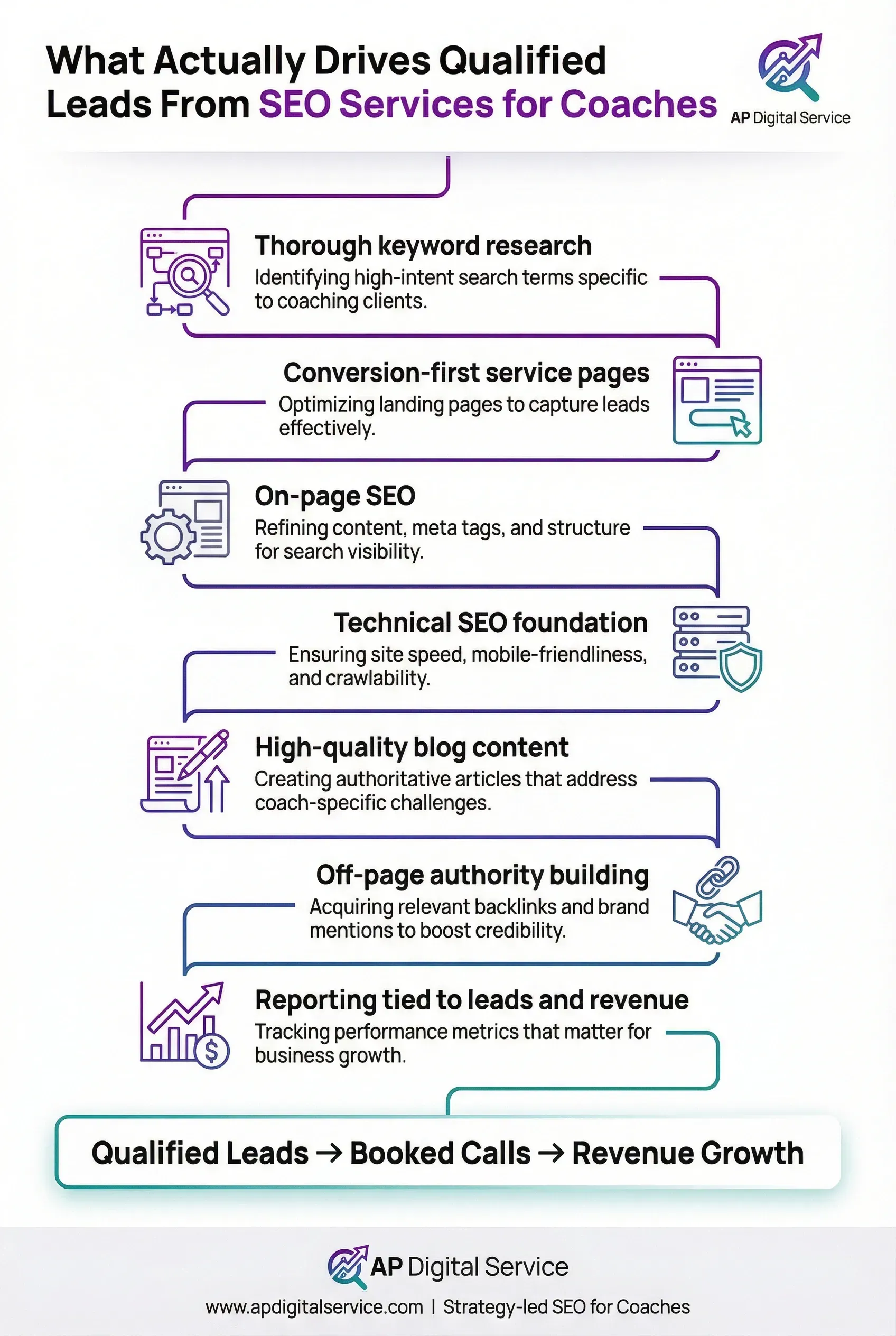
The services that tend to matter most are:
- Thorough keyword research focused on buyer intent
- Conversion-first service pages for each coaching offer
- Strong on page SEO and web accessibility fundamentals
- A healthy technical foundation, including site speed and mobile usability
- High quality content mapped to real questions prospects ask
- Off page SEO and link building to build trust and authority
- Ongoing performance tracking so SEO effectiveness is tied to leads and revenue, not just rankings
We have seen this consistently in practice. Results do not come from random content production. They come from a combination of optimized long-form content, technical SEO, strategic internal linking, and conversion paths that turn visibility into action.
Keyword Research and Organic Search Intent: What Qualified Leads Are Actually Searching
If you want SEO to drive revenue, keyword research has to begin with intent.
The question is not, “What has the highest search volume?”
The better question is, “What are high-intent prospects typing into search engines when they are actively looking for help?”
That means prioritizing:
- Relevant keywords tied to coaching outcomes
- Niche keywords and long-tail phrases that signal buyer intent
- Questions your target audience asks when they are trying to solve an urgent problem
- Terms that align with your specific coaching services, pricing, and positioning
This is where many coaches go off track. They target broad phrases that may bring visibility but not qualified leads. Effective SEO strategies focus on the language real buyers use when they are closer to a decision.
That is why we emphasize keyword strategy over keyword stuffing. Smart SEO uses strategic keyword placement, clear page intent, and a keyword map that helps search engines understand what each page is meant to rank for.
Helpful tools can support this process, including Google Keyword Planner and Google Search Console, but tools alone are not enough. Strategy matters more than software.
Service Pages and On-Page SEO Optimization That Turn Search Visibility Into Leads
A lot of coaches have a website, but not a website that converts.
A high-performing SEO system needs dedicated service pages for each offer, with messaging that matches intent and makes the next step obvious. If a business coach, executive coach, or career coach has one generic page trying to do everything, it becomes much harder to rank and much harder to convert.
Strong on page SEO optimization includes:
- Clear page titles and headings
- Buyer-intent language in the opening copy
- Strong meta descriptions
- Natural use of core and supporting SEO keywords
- Internal links that connect related pages
- Calls to action that move visitors into a lead path
This matters because search visibility without conversion is just attention. To attract paying clients, your pages need to qualify visitors before contact and reduce friction for people who are already comparing options.
One of the clearest lessons from our work is that trust at the moment of intent matters more than raw traffic volume. Put simply, you can’t outspend trust.
Meta Descriptions, Search Results, and the Signals That Improve Search Rankings
It is easy to overlook smaller on-page elements when thinking about SEO, but details matter.
Your meta descriptions, title tags, headers, and page structure all shape how your site appears in search results and how well pages align with intent. They may not do all the heavy lifting on their own, but they support stronger search rankings, better click-through rates, and clearer communication to both users and search engines.
Good on-page optimization helps:
- Support clearer relevance signals
- Strengthen search engine rankings over time
- Improve click appeal in search engine results
- Create a better user experience once someone lands on the page
These are not flashy changes. But they are part of the compounding effect of strategic SEO.
Technical SEO and Website Foundations That Support Ongoing SEO Efforts
Even the best messaging will struggle if the site itself gets in the way.
That is why technical SEO matters. A proper technical SEO audit helps uncover the problems that quietly limit performance, including:
- Broken links
- Weak site speed
- Redirect problems
- Poor page structure
- Mobile usability issues
- Crawl or indexing errors
- Anything that may prevent search engines from properly accessing important pages
Our experience has shown that search engine optimization requires more than content. It requires a website foundation that supports ongoing growth. When a site is hard for Google or Bing to crawl, slow to load, or confusing to navigate, both users and search engines struggle.
Good technical work does more than support rankings. It also improves conversion rates by making the site easier to use.
Content Strategy: High Quality Content, Blog Posts, and Authority That Converts
One of the clearest lessons from our work is that blogging is not supplemental. It is central.
A large share of the strongest-performing assets on well-built sites are blog posts that answer specific questions and match search intent. That matters because high quality content does more than bring traffic. It helps demonstrate expertise, build trust, and expand discovery beyond branded demand.
The blogging strategy that works includes:
- Educational posts answering specific “how to” questions
- Content mapped to keyword opportunities
- Internal links back to core service pages
- Content designed to solve real problems and create value upfront
- Updates to optimize existing content as rankings improve
This is an important distinction. Many coaches think they need to constantly create content. But the point is not endless content creation. The point is publishing valuable content that targets real buyer questions and supports the broader SEO system.
That is how quality blogging contributes to both organic traffic growth and revenue growth over time.
Off Page SEO, High Quality Backlinks, and Authority Beyond Your Own Website
Great website content helps, but off-site trust signals matter too.
Off page SEO is how you strengthen authority beyond your own SEO ecosystem. This can include:
- Mentions from other websites
- Podcast appearances
- Guest contributions
- Digital PR
- High quality backlinks from relevant sources
Not all links are equal. The goal is not volume for the sake of it. The goal is trust. Strong links from reputable sites help reinforce authority, improve online visibility, and support improving search engine rankings.
For coaches, this can be especially powerful when paired with strong content and a clear niche. It helps search engines see your site as credible, not just active.
Local SEO and Search Visibility for Nearby Clients
Not every coach needs local SEO, but for the right model, it matters.
If part of your coaching business depends on local discovery, local search can help capture demand efficiently. That can include:
- A complete Google Business Profile
- Consistent business information across listings
- Reviews tied to the right location signals
- Location-aware pages where relevant
For some coaches, especially those with in-person, hybrid, or location-based credibility, local SEO can become a meaningful layer inside a broader digital marketing strategy.
Integrating SEO With Google Ads, Email Marketing, and Other Channels
SEO works even better when it is not isolated.
One of the strengths of The Full-Funnel Search System™ is that it recognizes that visibility and conversion are connected. SEO can build compounding demand, while Google Ads can help capture high-intent searches more immediately. Email marketing can help nurture leads who are not ready to act on the first visit.
This is what integrating SEO with other channels looks like in practice:
- SEO builds long-term authority and organic search visibility
- Google Ads captures immediate bottom-of-funnel intent
- Email workflows nurture prospects who need more trust before buying
- Conversion architecture improvements help paid, social, and organic traffic perform better
This is also why we do not frame SEO as being in competition with paid channels or social. Each serves a different function inside the same marketing strategy, while SEO makes every channel more effective over time.
Customized Strategies Tailored to Business Goals
There is no universal SEO playbook that works for every coach.
Effective SEO needs customized strategies tailored to:
- Your niche
- Your price point
- Your offers
- Your sales process
- Your business goals
- Your current authority and website condition
A life coach, executive coach, and business coach may all need SEO, but not the same roadmap. The right strategy depends on the coaching niche, target audience, and the revenue model behind the business.
That is why generic retainers often disappoint. They focus on activity instead of outcomes. Good SEO agency work should connect keywords, pages, authority building, and conversion paths back to revenue and lead quality.
Measuring SEO Success: More Than Keyword Rankings
You should absolutely track keyword rankings, search rankings, and SEO rankings.
But those are not the end goal.
The metrics that matter more are:
- Qualified leads
- Booked calls
- Conversion rate by page
- Lead quality
- Revenue influenced by organic search
- Trend lines in organic traffic
- Performance of specific pages over time
Our experience has shown that SEO becomes a second revenue engine when it is measured this way. That shift matters because it moves SEO from “marketing activity” into key business infrastructure that drives sustainable growth.
That is what SEO success looks like: not just more visibility, but better visibility that encourages leads to take action and creates more revenue for your coaching business.
Case Study Proof: What the Right SEO Strategy Made Possible
One example of this in action is Broda Coaching.
In that case, the work did not just improve search presence. It created a second engine for growth.
Before the new website, LinkedIn had been the only funnel for over five years. After the SEO infrastructure was built, traffic from SEO infrastructure reached 2,363 clicks, nearly matching LinkedIn’s 2,400 clicks in under a year. That meant search became a meaningful parallel acquisition channel rather than a “nice to have.”
And the impact went beyond clicks. The combination of strong SEO-optimized content, technical improvements, internal linking, and authority building helped create substantial website-influenced annual revenue of $208K and a strong ROI of 396%.
That is the difference between random SEO work and a real system.
See the Broda Coaching SEO Case Study.
What Actually Drives Qualified Leads From SEO Services for Coaches
If you strip away the noise, the answer is pretty simple.
The best SEO services for coaches are built on:
- Thorough keyword research
- Strong service pages
- Technical health
- Useful, search-aligned content
- Conversion paths
- Authority building
- Clear reporting tied to lead generation and revenue
What actually drives qualified leads is not activity for activity’s sake. It is the combination of structure, trust, and intent.
That is why the best SEO services for coaches do not just increase visibility. They create a durable growth asset that helps attract ideal clients, reduce founder dependence, and compound over time.
Next Steps: See What This Looks Like for Your Site
If you want to know what is actually holding back your SEO results, the next step is simple:
We will show you:
- How your site is showing up in search today
- Where your best opportunities are
- What is limiting your visibility and conversions
- What it would take to attract more qualified leads through The Full-Funnel Search System™
You will get a video walkthrough of your current visibility, rankings, and highest-leverage next steps.